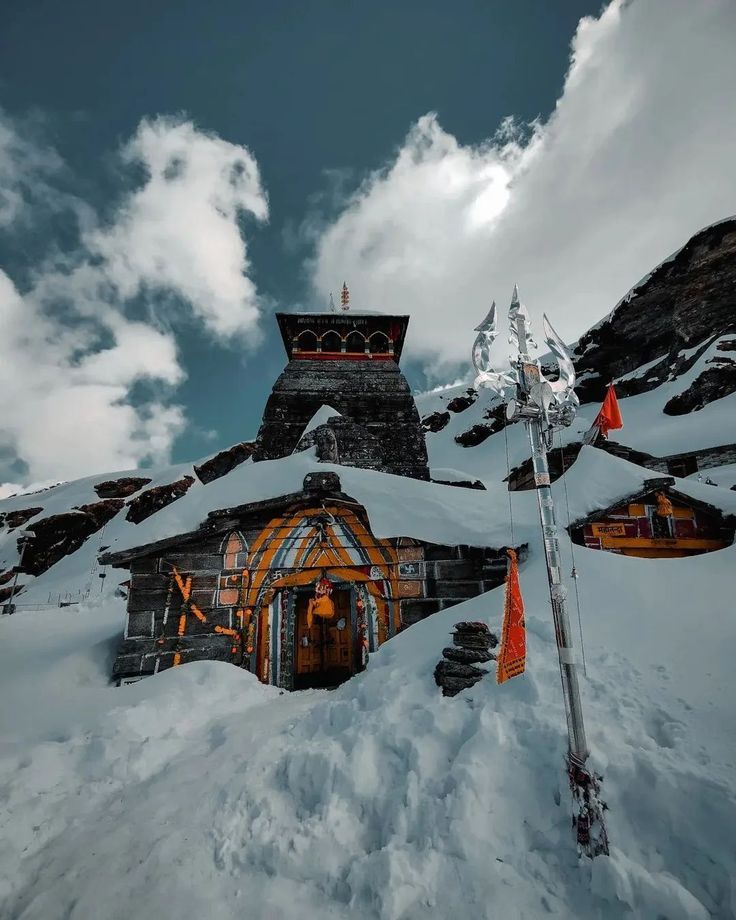
Panch Kedar Trek — Five Temples, Five Landscapes, One Complete Journey Through Garhwal

Description

Panch Kedar is not one trek. It is a circuit connecting five separate Shiva temples across the interior of the Garhwal Himalayas, each one demanding its own approach trail, its own overnight stays, and its own particular quality of effort. Completing all five is a real undertaking — in time, in distance, in altitude, and in the sustained physical commitment it requires. But there is nothing else in Uttarakhand that covers this range of landscape, altitude, and cultural depth in a single journey.

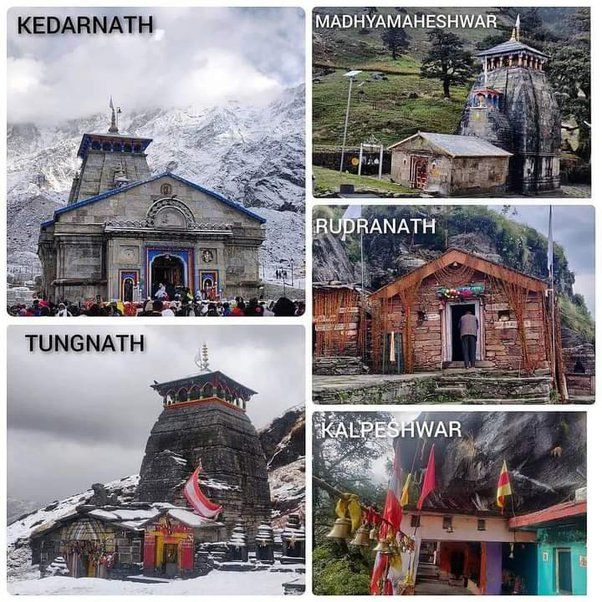
The five temples are Kedarnath, Tungnath, Rudranath, Madhyamaheshwar, and Kalpeshwar. Each represents a different form of Shiva — the hump at Kedarnath, the arms at Tungnath, the face at Rudranath, the navel at Madhyamaheshwar, the matted hair at Kalpeshwar. The mythology behind the circuit traces to the Mahabharata: the Pandavas, seeking Shiva’s forgiveness after the destruction of Kurukshetra, were told they must worship at these five specific forms across these five specific mountains.

Most people know Kedarnath — it is one of the twelve Jyotirlingas and receives hundreds of thousands of pilgrims every season. Far fewer have stood at Rudranath in the remote Panar Bugyal wilderness, or watched the sun set from the meadow at Madhyamaheshwar with the Kedarnath peaks directly across the valley. Those places exist in a different register entirely, and they are the reason the full circuit is worth the time.

Five Temples at a Glance

TempleAltitudeTrek DistanceAssociated Form of Shiva
Kedarnath11,755 ft16 km from GaurikundBack (hump)
Tungnath12,073 ft3.5 km from ChoptaArms
Rudranath11,800 ft20–24 km from Sagar/UrgamFace
Madhyamaheshwar11,473 ft24 km from RansiNavel
Kalpeshwar7,218 ft2 km from UrgamJata (matted hair)

Each Temple in Detail

Kedarnath

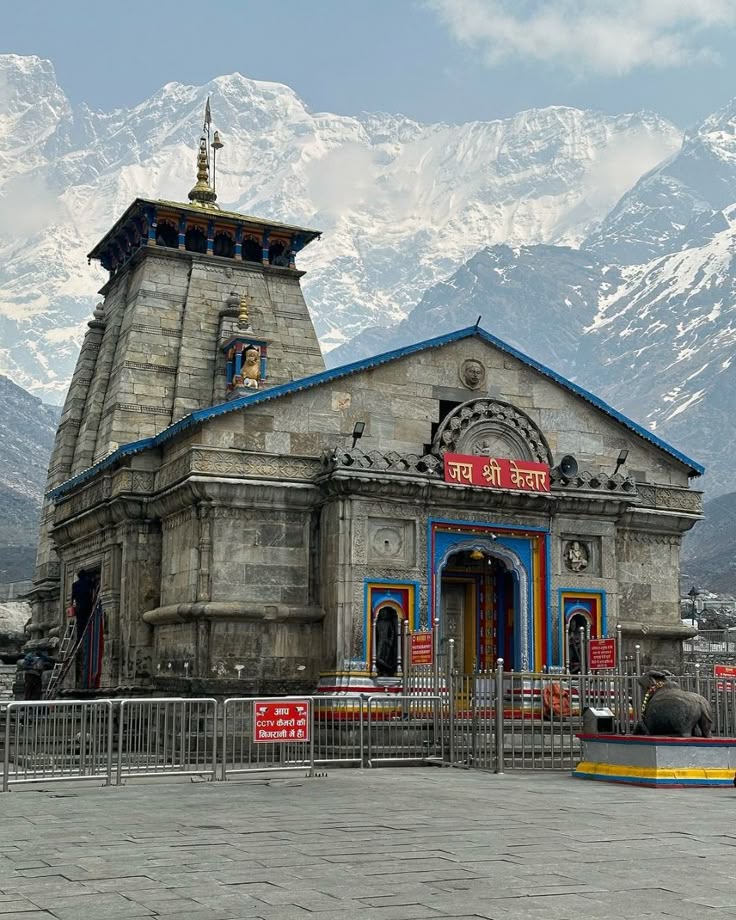
The most visited of the five and one of the most significant pilgrimage sites in India. The temple sits at 11,755 feet in a broad mountain amphitheatre with glaciated peaks on three sides. The trek from Gaurikund (16 km uphill) can be done on foot, by pony, or by helicopter from Phata or Guptkashi. Staying overnight is strongly recommended — the 4 AM aarti inside the temple, with the bell sound echoing off the surrounding mountains in pre-dawn darkness, is an experience that cannot be replicated by a same-day visit.

Tungnath

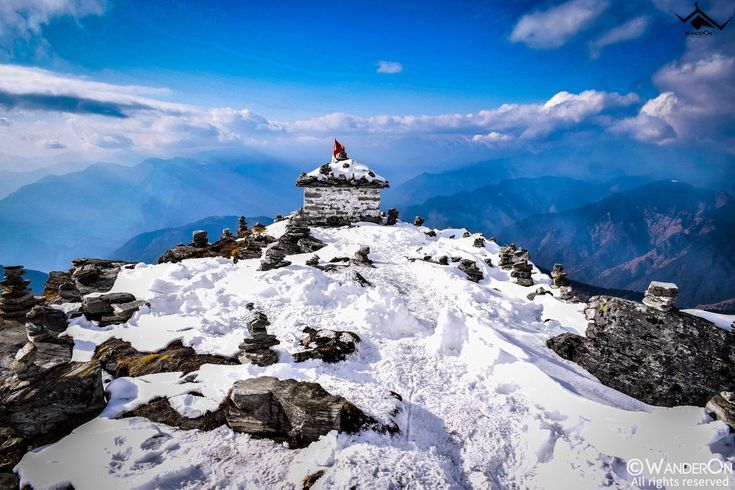
The world’s highest Shiva temple at 12,073 feet, accessible from Chopta by a 3.5 km trail. The walk through silver fir and rhododendron forest is one of the finest short treks in Garhwal. From Tungnath, an additional kilometre reaches Chandrashila at 13,123 feet — a 360-degree panoramic summit accessible to almost anyone with reasonable fitness.

Rudranath

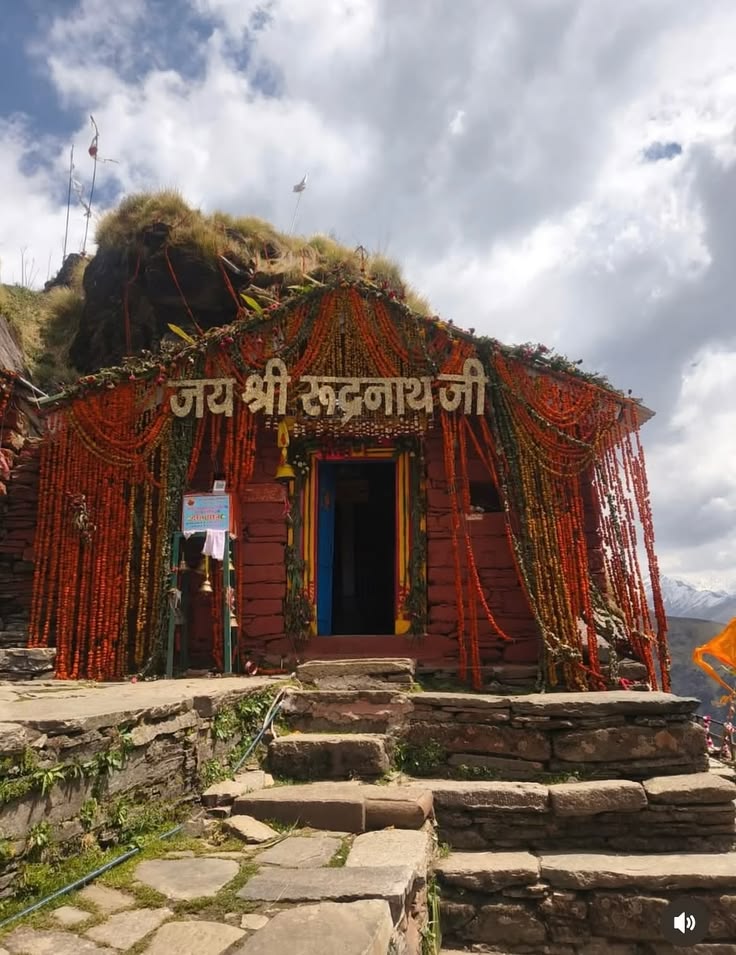
The most remote of the five. The trek from Sagar or Urgam covers 20 to 24 km through dense forest and open bugyals including the celebrated Panar Bugyal. The temple at 11,800 feet is set in a natural rock face with a small permanent water source beside it. This is the temple the circuit changes people’s minds about — those who almost skipped it because of the distance are invariably glad they did not. A local guide is essential; the trail has sections that are poorly marked and genuinely easy to lose in cloud or after recent snowfall.

Madhyamaheshwar

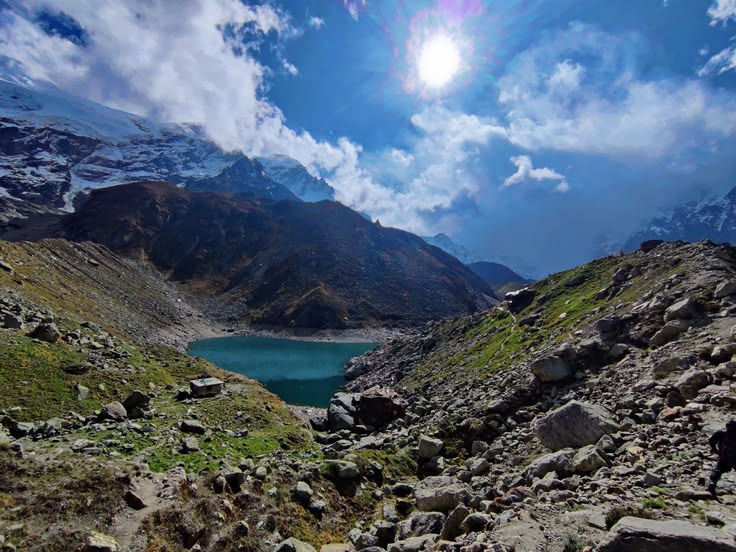
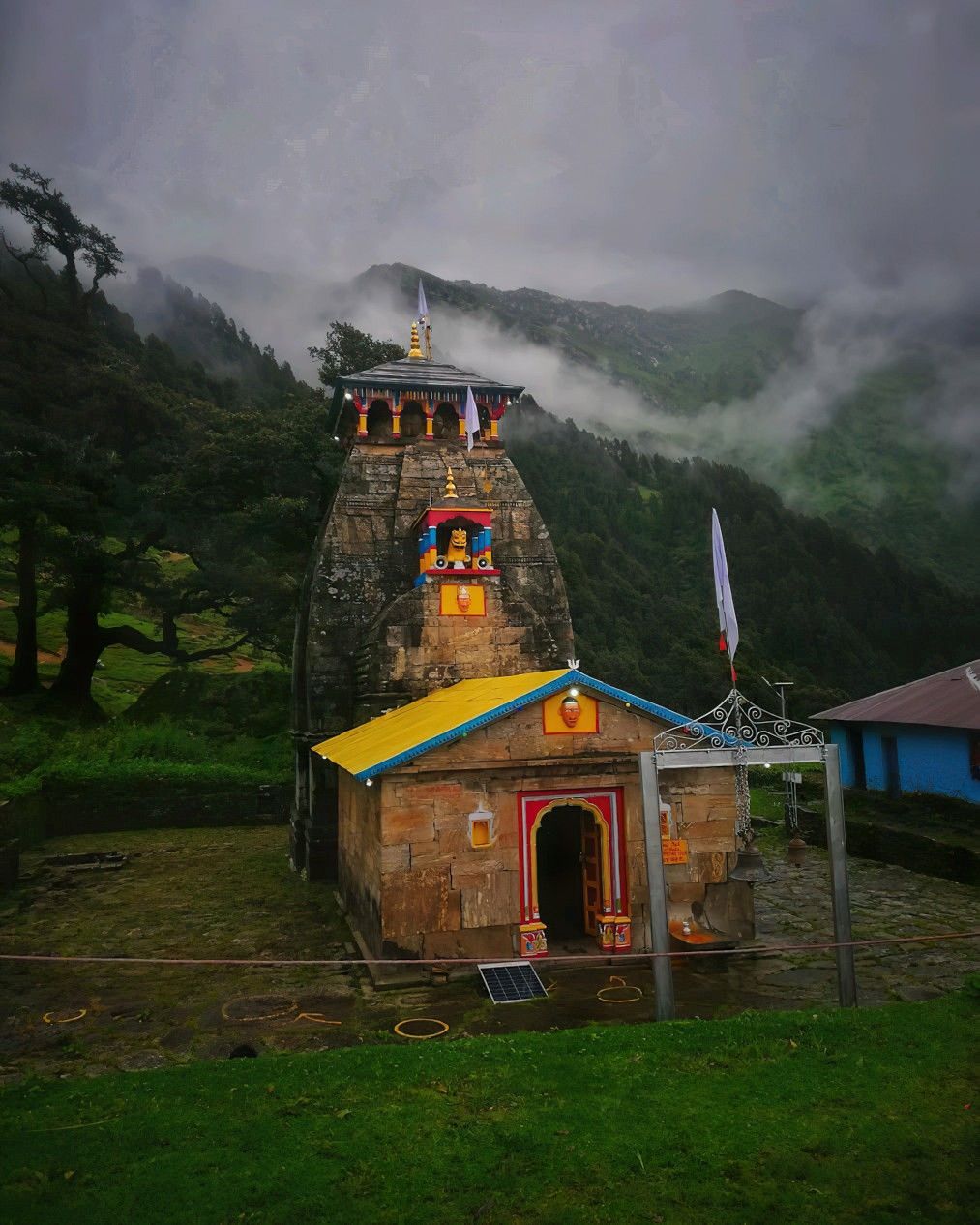
The quietest of the five. At 11,473 feet on a ridge above the Madhyamaheshwar river valley, the meadow surrounding the temple looks directly across at Kedarnath, Kedarnath Dome, and the peaks of the Gangotri range. The 24 km round trek from Ransi village takes two days with a night on the trail. There are very few places in the Indian Himalaya where you can sit in a mountain meadow with this specific view and this specific quiet.

Kalpeshwar

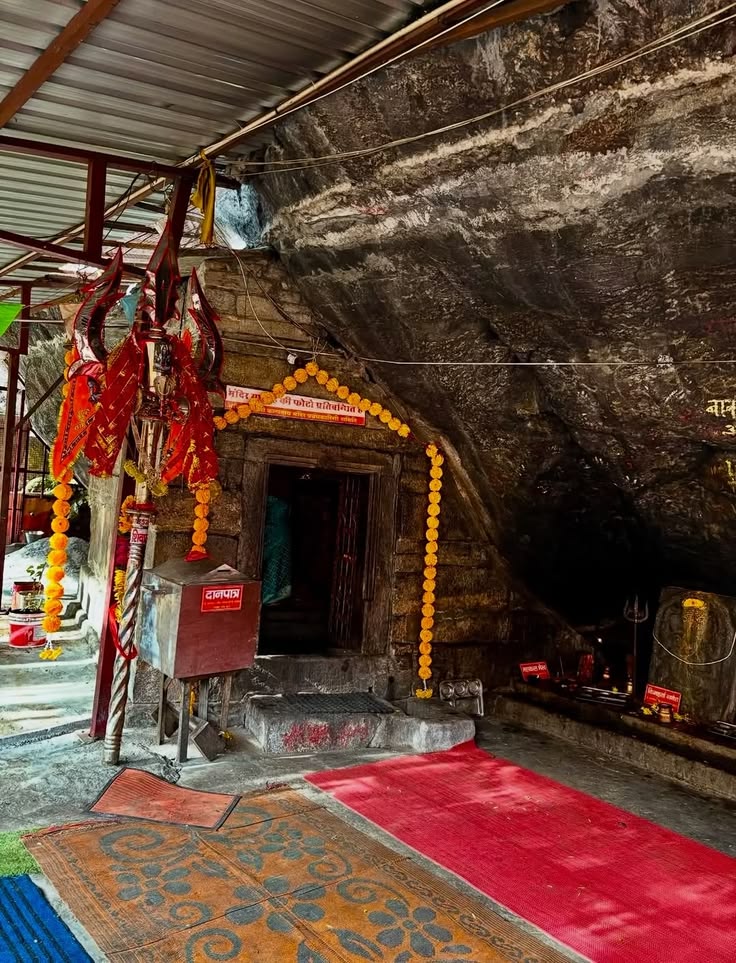
The most accessible of the five and the only one open year-round. The temple sits inside a natural cave 2 km from Urgam village near Helang. The setting — stone walls, dim lamp light, the sound of water nearby — is unlike any of the other four. As a final stop on the circuit, it provides a gentle and atmospheric conclusion to what has been a very long journey.

How to Reach the Circuit Starting Points

Rishikesh or Haridwar is the base for the entire circuit. The five trailheads span a wide area of Garhwal:

  • Kedarnath: Gaurikund via Rudraprayag, Sonprayag (220 km from Rishikesh)
  • Tungnath: Chopta via Ukhimath (200 km from Rishikesh)
  • Rudranath: Sagar or Gopeshwar via Chamoli (230 km from Rishikesh)
  • Madhyamaheshwar: Ransi village via Ukhimath (210 km from Rishikesh)
  • Kalpeshwar: Urgam or Helang via Chamoli (200 km from Rishikesh)

All are reachable from the NH58 Rishikesh–Badrinath highway or its branches.

What to Expect on the Ground

Total trekking distance across all five legs is over 90 km. Accommodation ranges from well-equipped lodges near Kedarnath and Badrinath to basic tents on the Rudranath and Madhyamaheshwar trails. All four temples open on Akshaya Tritiya in May and close on Bhai Dooj in October or November. Kalpeshwar alone remains open through the year. Helicopter bookings for Kedarnath should be made months in advance for peak season.


Highlights Icon

Highlights

  • Five Ancient Shiva Temples, Five Different Worlds — Kedarnath's dramatic amphitheatre, Tungnath's forest ridge, Rudranath's remote wilderness, Madhyamaheshwar's meadow silence, Kalpeshwar's cave setting — each temple occupies a completely distinct landscape and carries a completely distinct atmosphere.
  • The 4 AM Kedarnath Aarti — The morning ritual inside one of India's most sacred temples, in pre-dawn darkness with the surrounding peaks just beginning to catch light outside. Staying overnight for this is the single most important decision of the Kedarnath leg.
  • Rudranath — The Temple Almost Nobody Reaches — A 20 to 24 km trek through Panar Bugyal and dense forest to a temple set in a natural rock face at 11,800 ft. The remoteness is the point — this is what the Garhwal Himalaya looks like before the roads arrive.
  • Madhyamaheshwar Meadow with Kedarnath in View — The meadow surrounding this temple, at 11,473 ft, looks directly across the valley at Kedarnath and Kedarnath Dome. There are very few places in the Indian Himalaya where this particular combination of quiet and view exists.
  • Chandrashila Summit Above Tungnath — A full Himalayan panorama from 13,123 ft, accessible on a 3.5 km forest walk — one of the most rewarding short climbs in Garhwal.
  • Over 90 km of Trek Distance Across Five Legs — The full circuit is a complete Himalayan journey — forest paths, high bugyals, mountain meadows, cave temples — more varied than any single trek in the region.

Included

  • Accommodation throughout the circuit — guesthouses, lodges, and tents as per leg
  • All meals from Day 1 dinner to the final day's breakfast
  • All temple-related permits and forest entry fees across all five legs
  • Certified guides for each individual leg, including local Rudranath guide
  • Camping equipment for trail nights
  • First aid kit and basic medical support throughout

Excluded

  • Personal trekking gear
  • Helicopter charges for Kedarnath (if opted for instead of trekking)
  • Meals during road transit days
  • Pony, doli, or porter charges for personal use
  • Travel insurance (strongly recommended for a circuit this long)
  • Any costs from extending the trip beyond the 18-day itinerary
  • Anything not specifically mentioned under inclusions

Travel Itinerary

Day 1 - Rishikesh to Sonprayag or Guptkashi

Drive | ~6 hours | Altitude: 5,900 ft

Morning departure from Rishikesh. The road follows the Alaknanda highway through Devprayag and Rudraprayag before turning onto the Mandakini valley route toward the Kedarnath region. Overnight stop at Sonprayag or Guptkashi — both are well-connected staging towns with good guesthouse options. Early dinner and rest before the Kedarnath climb begins tomorrow.

Day 2 - Sonprayag to Gaurikund, Trek to Kedarnath

Trek | 16 km downhill | 4–5 hours

Up at 3:30 AM. The temple lane is already moving with people carrying lamps when you step outside. The 4 AM aarti inside Kedarnath — bell sound building through the stone interior, butter lamps lit, the pre-dawn cold visible through the open temple door — is the defining moment of the entire Panch Kedar circuit. After the ceremony, breakfast and the 16 km descent to Gaurikund. Long day with an early start. Worth every part of it.

Day 3 -

Trek | 16 km downhill | 4–5 hours

Up at 3:30 AM. The temple lane is already moving with people carrying lamps when you step outside. The 4 AM aarti inside Kedarnath — bell sound building through the stone interior, butter lamps lit, the pre-dawn cold visible through the open temple door — is the defining moment of the entire Panch Kedar circuit. After the ceremony, breakfast and the 16 km descent to Gaurikund. Long day with an early start. Worth every part of it.

Day 4 - Gaurikund to Ukhimath, Drive to Chopta

Drive | 5 hours | Altitude: 8,790 ft

Road transfer from Gaurikund toward the Tungnath leg. The route goes via Ukhimath and climbs to Chopta at 8,790 feet. Arrive in the afternoon and walk the silver fir meadows before dark. The Chopta bugyals are one of the finest overnight settings in Garhwal. Second Kedar tomorrow.

Day 5 - Chopta to Tungnath to Chandrashila and Back

Trek | 9 km round trip | 5–6 hours | Max altitude: 13,123 ft

Early start for clear skies. The 3.5 km forest trail to Tungnath — the world's highest Shiva temple at 12,073 ft — is one of the finest short walks in the region. After darshan at the temple, the additional 1 km to Chandrashila summit at 13,123 ft delivers a complete 360-degree panorama: Kedarnath, Chaukhamba, Trishul, Nanda Devi, Bandarpunch. Descend to Chopta by afternoon.

Day 6 - Chopta to Gopeshwar

Drive | 3 hours | Altitude: 4,900 ft

Short morning drive to Gopeshwar — the base town for the Rudranath approach, the most remote leg of the circuit. Rest the afternoon. Trail briefing from the local guide in the evening. The Rudranath path is long and the trail markers are unreliable — an experienced guide is non-negotiable from this point.

Day 7 - Gopeshwar to Panar Bugyal Camp

Trek | 10 km | 5–6 hours | Altitude: ~11,000 ft

The trail from Sagar village near Gopeshwar climbs steeply through dense mixed forest before the treeline drops away and Panar Bugyal opens up. The transition from closed forest to open high-altitude meadow is one of the striking moments on this leg — the Himalayan peaks that were invisible through the trees suddenly appear all at once. Camp in or near the bugyal.

Day 8 - Panar Bugyal to Rudranath Temple Camp

Trek | 8–10 km | 5–7 hours | Altitude: 11,800 ft

The trail from the bugyal continues toward the Rudranath basin through a mix of rocky open terrain and patches of low alpine scrub. The temple appears set into a natural rock face — a stone structure in a setting of complete wilderness with a permanent spring beside it. No road reaches here, no phone signal, no infrastructure beyond the trail and the shrine. This is the temple the circuit changes people's minds about. Camp near the temple.

Day 9 - Rudranath Temple to Gopeshwar

Trek | 18–20 km | 7–8 hours

Full return trek through Panar Bugyal and the forest back to Sagar village and on to Gopeshwar. The downhill is long and the legs will feel the accumulated days. Reach Gopeshwar by late afternoon.

Day 10 - Gopeshwar to Ransi Village

Drive | 4 hours | Altitude: 6,500 ft

Road transfer to Ransi village near Ukhimath — the trailhead for Madhyamaheshwar, the fourth Kedar. The village sits quietly in a mountain valley with guesthouses and basic facilities. Rest afternoon. The trail starts fresh in the morning.

Day 11 - Ransi to Bantoli to Madhyamaheshwar

Trek | 12 km | 6–7 hours | Altitude: 11,473 ft

The trail from Ransi climbs through forest and terraced village farmland before opening into alpine meadow. Bantoli is a midpoint rest stop. The final section brings you to the meadow surrounding Madhyamaheshwar temple at 11,473 feet. The view from this meadow — Kedarnath and Kedarnath Dome directly across the valley, the Gangotri peaks visible beyond — is one of the quietest and most powerful mountain scenes on the entire circuit. Camp near the temple.

Day 12 - Madhyamaheshwar to Ransi

Trek | 12 km | 5–6 hours

Morning at the meadow — spend time before beginning the descent. The temple in the early light, with the peaks behind it and nothing else in any direction, is worth the extra half hour. Return trek to Ransi by afternoon.

Day 13 - Ransi to Urgam or Helang Village

Drive | 4 hours

Road transfer to Urgam village near Helang — the base for Kalpeshwar, the fifth and final Kedar. The drive crosses familiar Garhwal highway territory and arrives in the Alaknanda valley region. Rest and overnight in Urgam or a nearby guesthouse.

Day 14 - Trek to Kalpeshwar Temple and Back

Trek | 4 km round trip | 1.5–2 hours | Altitude: 7,218 ft

The gentlest approach of all five temples — 2 km from Urgam through a forested path that descends slightly to the cave temple. Kalpeshwar sits inside a natural rock cave where the ceiling closes in low and the light comes mainly from the butter lamps inside. The sound of water from a nearby spring carries into the cave. It is the most intimate of the five temples and the only one open year-round. As the last stop on the circuit, the quiet of this place — after Kedarnath's crowds, Rudranath's remoteness, Madhyamaheshwar's scale — feels exactly right. Return to Urgam.

Day 15 - Urgam to Rudraprayag or Rishikesh

Drive | 4–6 hours

Begin the return journey. Depending on pace, either overnight in Rudraprayag or push through to Rishikesh if departure time allows.

Day 16 - Return to Rishikesh (if not completed on Day 15)

Drive | 3–4 hours from Rudraprayag

Final drive back down the Alaknanda highway. Rishikesh by midday.

Frequently Asked Questions

Can I do individual Kedar treks instead of the full circuit?

Yes. Many trekkers complete individual legs — Kedarnath, Tungnath, or Madhyamaheshwar — as standalone treks rather than the full 18-day circuit. The full Panch Kedar is typically attempted by those seeking the complete pilgrimage experience.

Which is the hardest of the five temples to reach?

Rudranath, without question. The trail is long, remote, and poorly marked in sections, requiring a local guide and good fitness.

Do I need to do all five temples in the traditional order?

No, though the order presented here is logistically efficient given the road network. Some operators customise the sequence based on weather and group preference.

How physically demanding is the full circuit?

Very. Across 16 to 18 days, you cover over 90 km of trekking distance combined with significant road travel, multiple altitude adjustments, and varying terrain. Good baseline fitness and ideally some Himalayan trekking experience are recommended.

Is it possible to skip Kalpeshwar since it is open year-round?

Yes, since Kalpeshwar does not have the seasonal constraint of the other four, some trekkers choose to visit it separately at a different time, focusing this circuit on the four seasonal temples.

From ₹0.00

Book This Tour

Person Info

Loader
Thank You

Booked Successfully

  • Details
Booking Summary

Panch Kedar Trek — Five Temples, Five Landscapes, One Complete Journey Through Garhwal

Have a question in mind

Looking for more info? Send a question to the tour agent to find out more.

From ₹0.00

Book This Tour

Person Info

Loader
Thank You

Booked Successfully

  • Details
Booking Summary

Panch Kedar Trek — Five Temples, Five Landscapes, One Complete Journey Through Garhwal

You might also like

Uttarakhand

Your Question