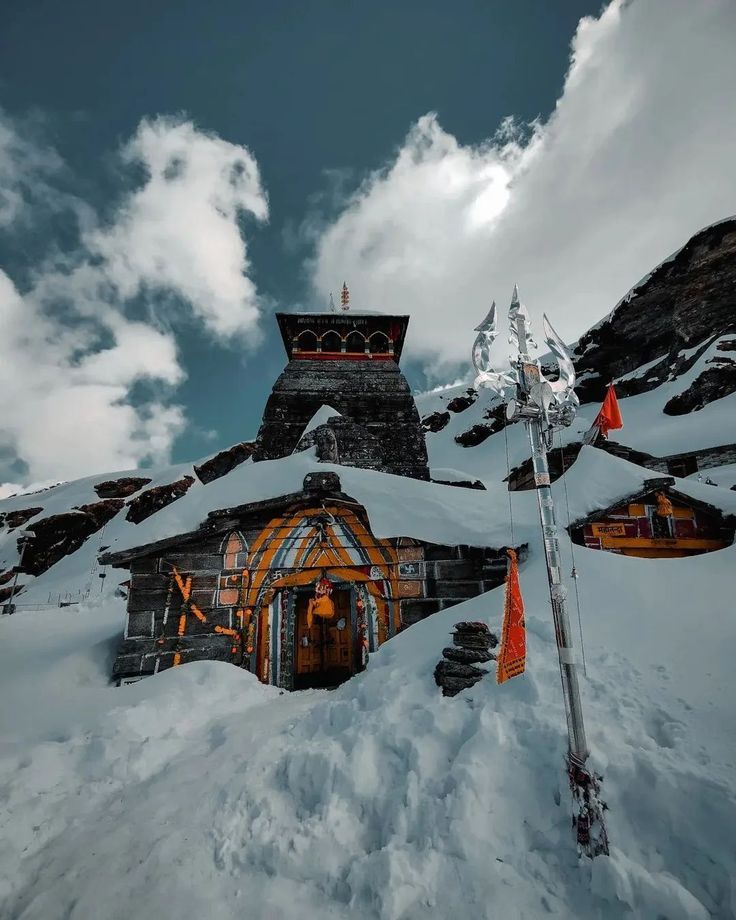
Panch Kedar is not one trek. It is a circuit connecting five separate Shiva temples across the interior of the Garhwal Himalayas, each one demanding its own approach trail, its own overnight stays, and its own particular quality of effort. Completing all five is a real undertaking — in time, in distance, in altitude, and in the sustained physical commitment it requires. But there is nothing else in Uttarakhand that covers this range of landscape, altitude, and cultural depth in a single journey.
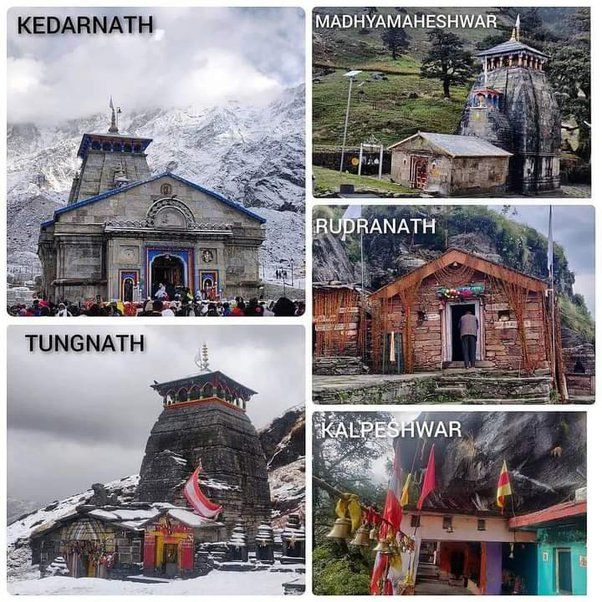
The five temples are Kedarnath, Tungnath, Rudranath, Madhyamaheshwar, and Kalpeshwar. Each represents a different form of Shiva — the hump at Kedarnath, the arms at Tungnath, the face at Rudranath, the navel at Madhyamaheshwar, the matted hair at Kalpeshwar. The mythology behind the circuit traces to the Mahabharata: the Pandavas, seeking Shiva’s forgiveness after the destruction of Kurukshetra, were told they must worship at these five specific forms across these five specific mountains.
Most people know Kedarnath — it is one of the twelve Jyotirlingas and receives hundreds of thousands of pilgrims every season. Far fewer have stood at Rudranath in the remote Panar Bugyal wilderness, or watched the sun set from the meadow at Madhyamaheshwar with the Kedarnath peaks directly across the valley. Those places exist in a different register entirely, and they are the reason the full circuit is worth the time.
Five Temples at a Glance
| Temple | Altitude | Trek Distance | Associated Form of Shiva |
|---|---|---|---|
| Kedarnath | 11,755 ft | 16 km from Gaurikund | Back (hump) |
| Tungnath | 12,073 ft | 3.5 km from Chopta | Arms |
| Rudranath | 11,800 ft | 20–24 km from Sagar/Urgam | Face |
| Madhyamaheshwar | 11,473 ft | 24 km from Ransi | Navel |
| Kalpeshwar | 7,218 ft | 2 km from Urgam | Jata (matted hair) |
Each Temple in Detail
Kedarnath
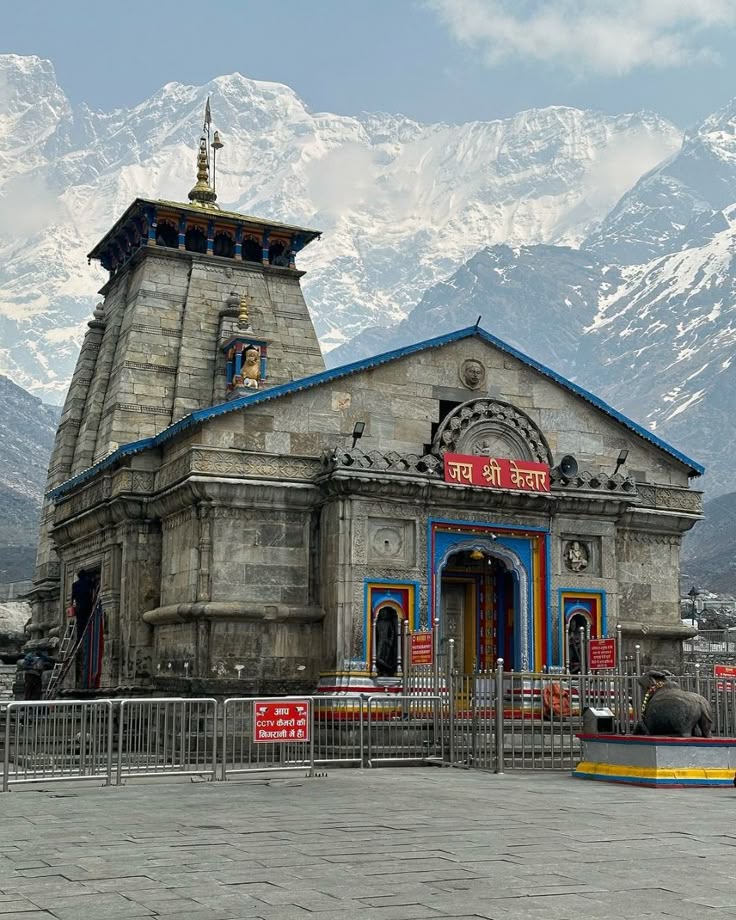
The most visited of the five and one of the most significant pilgrimage sites in India. The temple sits at 11,755 feet in a broad mountain amphitheatre with glaciated peaks on three sides. The trek from Gaurikund (16 km uphill) can be done on foot, by pony, or by helicopter from Phata or Guptkashi. Staying overnight is strongly recommended — the 4 AM aarti inside the temple, with the bell sound echoing off the surrounding mountains in pre-dawn darkness, is an experience that cannot be replicated by a same-day visit.
Tungnath
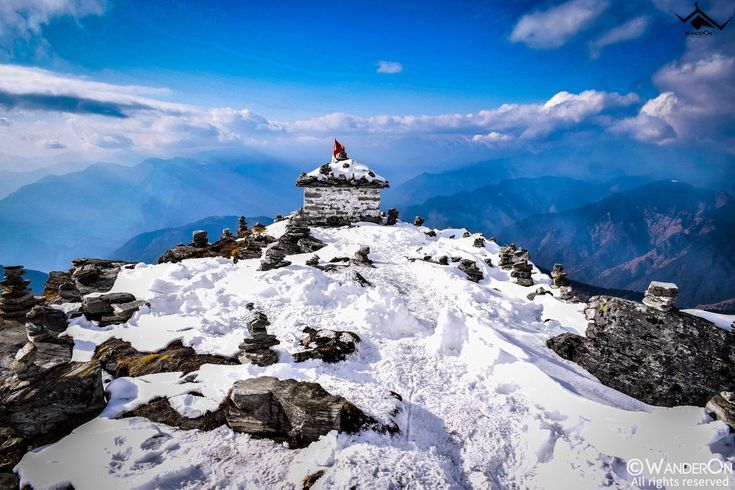
The world’s highest Shiva temple at 12,073 feet, accessible from Chopta by a 3.5 km trail. The walk through silver fir and rhododendron forest is one of the finest short treks in Garhwal. From Tungnath, an additional kilometre reaches Chandrashila at 13,123 feet — a 360-degree panoramic summit accessible to almost anyone with reasonable fitness.
Rudranath
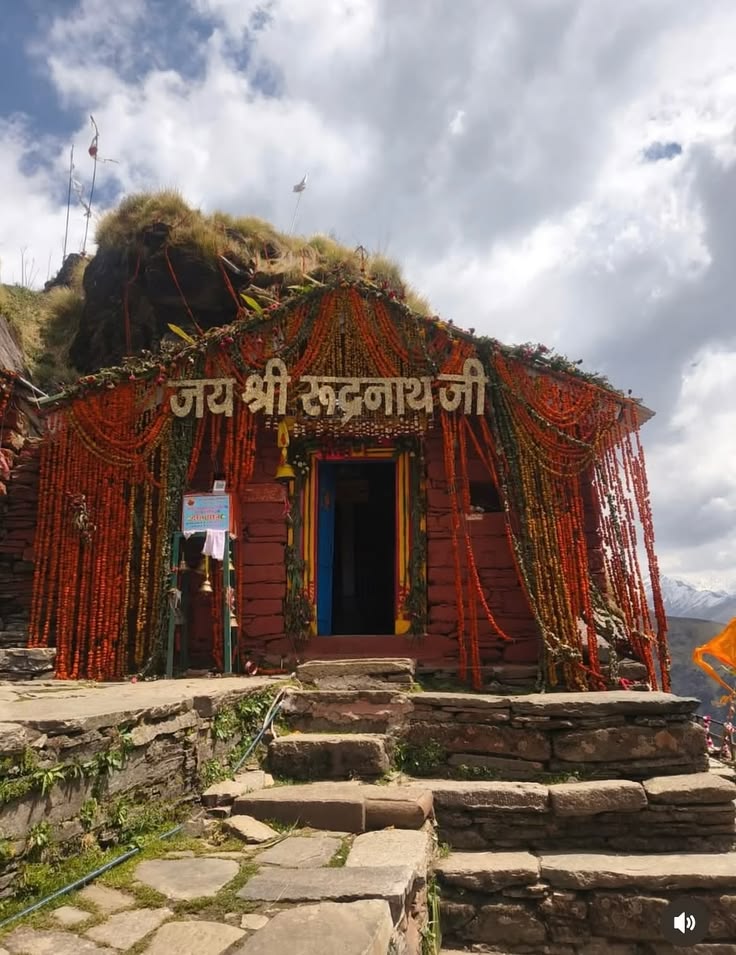
The most remote of the five. The trek from Sagar or Urgam covers 20 to 24 km through dense forest and open bugyals including the celebrated Panar Bugyal. The temple at 11,800 feet is set in a natural rock face with a small permanent water source beside it. This is the temple the circuit changes people’s minds about — those who almost skipped it because of the distance are invariably glad they did not. A local guide is essential; the trail has sections that are poorly marked and genuinely easy to lose in cloud or after recent snowfall.
Madhyamaheshwar
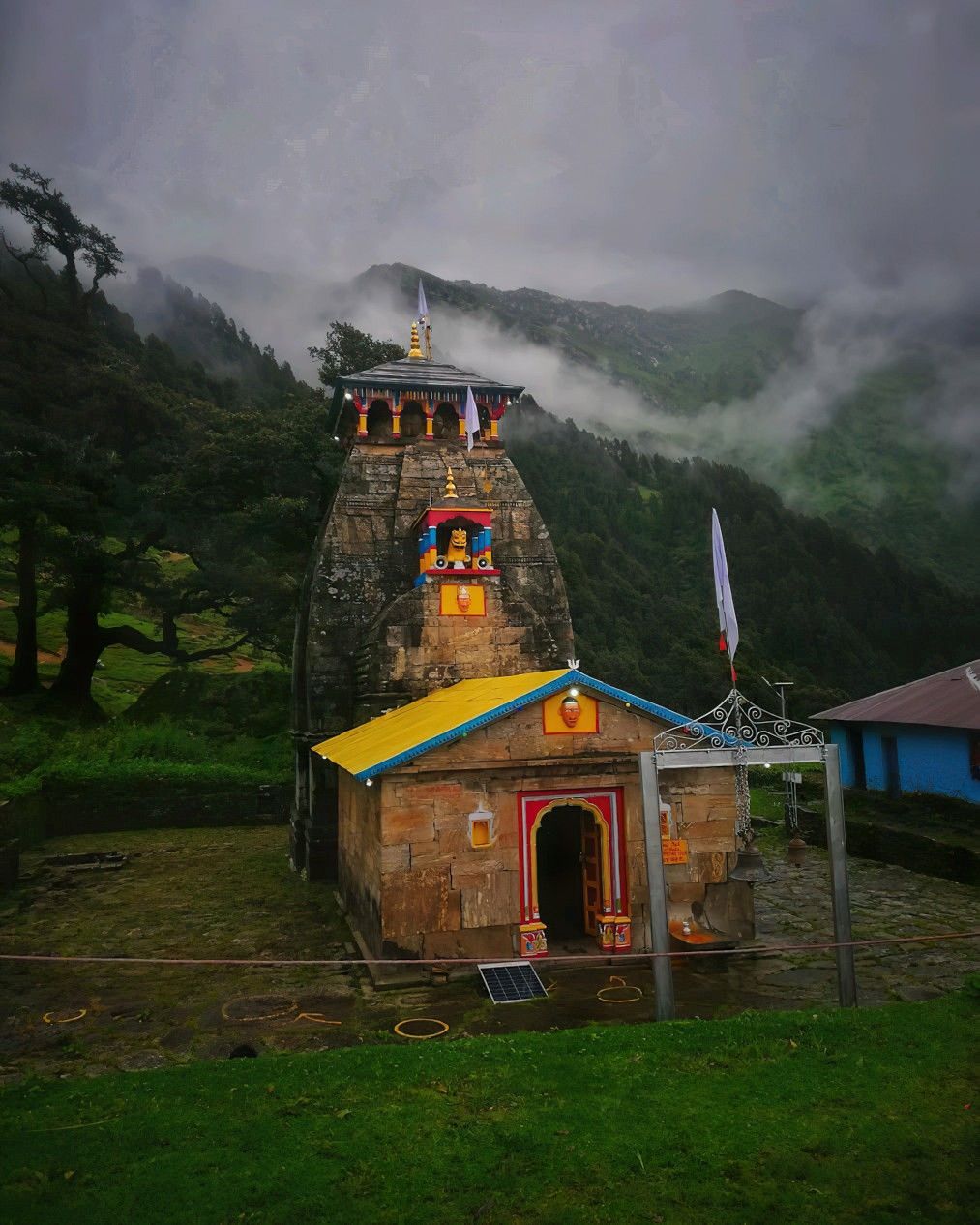
The quietest of the five. At 11,473 feet on a ridge above the Madhyamaheshwar river valley, the meadow surrounding the temple looks directly across at Kedarnath, Kedarnath Dome, and the peaks of the Gangotri range. The 24 km round trek from Ransi village takes two days with a night on the trail. There are very few places in the Indian Himalaya where you can sit in a mountain meadow with this specific view and this specific quiet.
Kalpeshwar
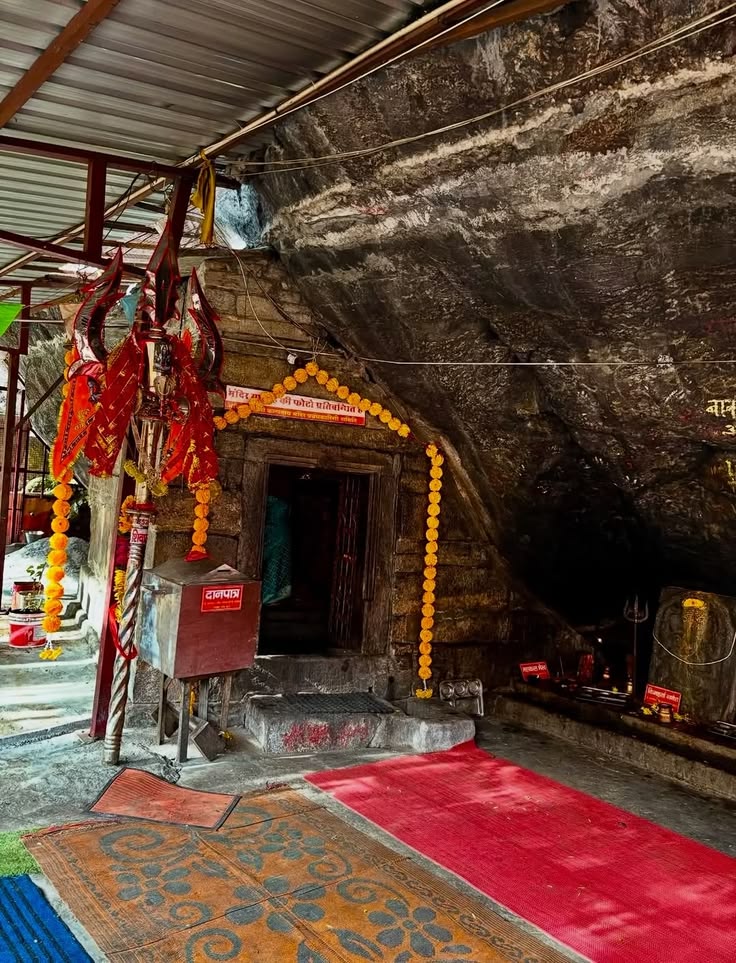
The most accessible of the five and the only one open year-round. The temple sits inside a natural cave 2 km from Urgam village near Helang. The setting — stone walls, dim lamp light, the sound of water nearby — is unlike any of the other four. As a final stop on the circuit, it provides a gentle and atmospheric conclusion to what has been a very long journey.
How to Reach the Circuit Starting Points
Rishikesh or Haridwar is the base for the entire circuit. The five trailheads span a wide area of Garhwal:
- Kedarnath: Gaurikund via Rudraprayag, Sonprayag (220 km from Rishikesh)
- Tungnath: Chopta via Ukhimath (200 km from Rishikesh)
- Rudranath: Sagar or Gopeshwar via Chamoli (230 km from Rishikesh)
- Madhyamaheshwar: Ransi village via Ukhimath (210 km from Rishikesh)
- Kalpeshwar: Urgam or Helang via Chamoli (200 km from Rishikesh)
All are reachable from the NH58 Rishikesh–Badrinath highway or its branches.
What to Expect on the Ground
Total trekking distance across all five legs is over 90 km. Accommodation ranges from well-equipped lodges near Kedarnath and Badrinath to basic tents on the Rudranath and Madhyamaheshwar trails. All four temples open on Akshaya Tritiya in May and close on Bhai Dooj in October or November. Kalpeshwar alone remains open through the year. Helicopter bookings for Kedarnath should be made months in advance for peak season.