
Duration: 6 Days
Maximum Altitude: 14,100 ft (Hemkund Sahib)
Valley Altitude: 10,500 ft – 12,000 ft
Difficulty: Easy to Moderate
Best Season: July to September (peak bloom: mid-July to mid-August)
Base: Ghangaria
UNESCO Status: World Heritage Site (2005)
Starting Point: Rishikesh
The Short Version
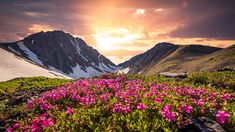
A glacial valley at 3,600 metres that blooms with over 500 species of wildflowers every monsoon season. UNESCO World Heritage Site. Combined with the Hemkund Sahib trek to a sacred Sikh shrine at 14,100 feet above a partially frozen glacial lake. Best visited mid-July to mid-August when the bloom is at its peak. Suitable for all fitness levels. One of the very few Himalayan treks that is specifically better in the monsoon.
The Longer Story
Most people who know anything about trekking in India will tell you to avoid the monsoon. The trails get muddy. The paths fill with leeches. The visibility drops. The views disappear behind cloud. They are right about all of that, and they are completely wrong about the Valley of Flowers.
This trail is specifically, deliberately, beautifully a monsoon trek. The wildflowers that cover the valley floor from wall to wall do not exist without the monsoon. The rain is not an obstacle here — it is the mechanism. The heavier the rain, the fuller the bloom. Mid-July to mid-August is peak season not despite the weather but because of it.
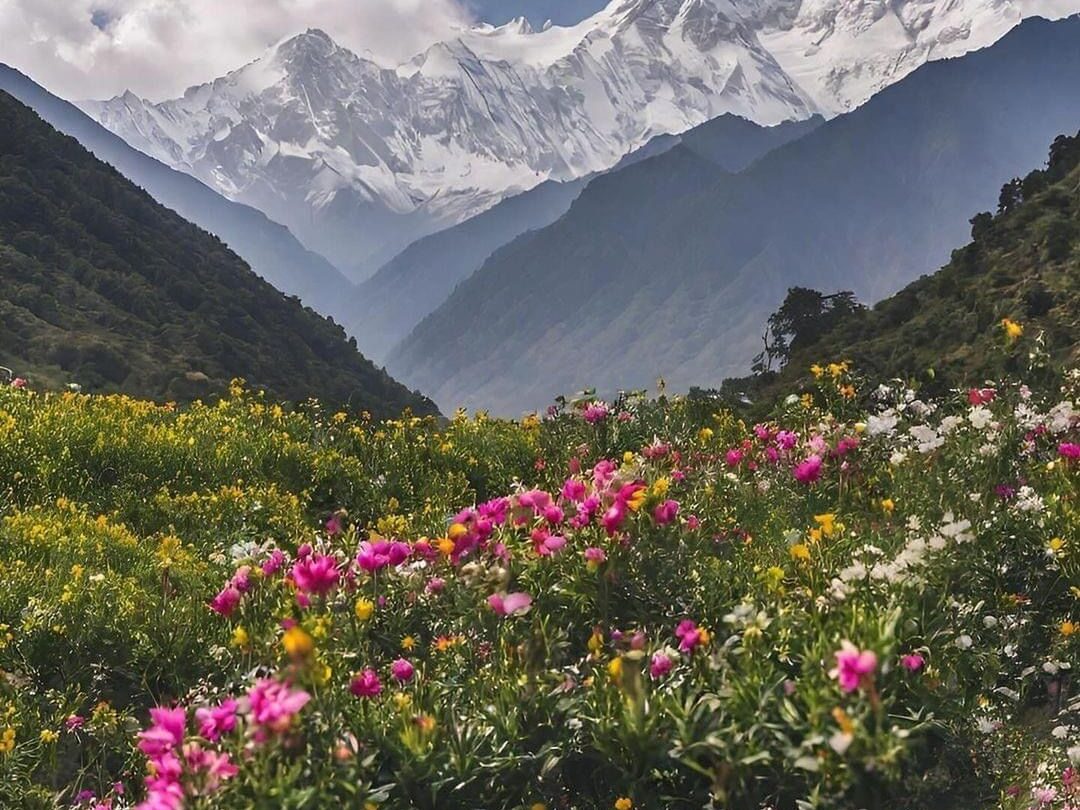
The valley opens suddenly when you round a bend on the trail from Ghangaria. There is no gradual reveal — one moment you are on a trail, and the next the full glacial bowl is in front of you, covered in Brahmakamal, blue poppy, cobra lily, anemone, primula, and hundreds of other species spread across a floor of vivid green at 10,500 to 12,000 feet. The scale of the bloom is genuinely difficult to communicate. UNESCO recognised it as a World Heritage Site in 2005 alongside the Nanda Devi National Park — rare recognition for what is essentially a wildflower meadow, but entirely deserved.
There are no formal paths inside the valley. You walk where the ground allows. Most people end up sitting down somewhere in the middle, eating lunch, and spending an hour just looking at things they cannot name.
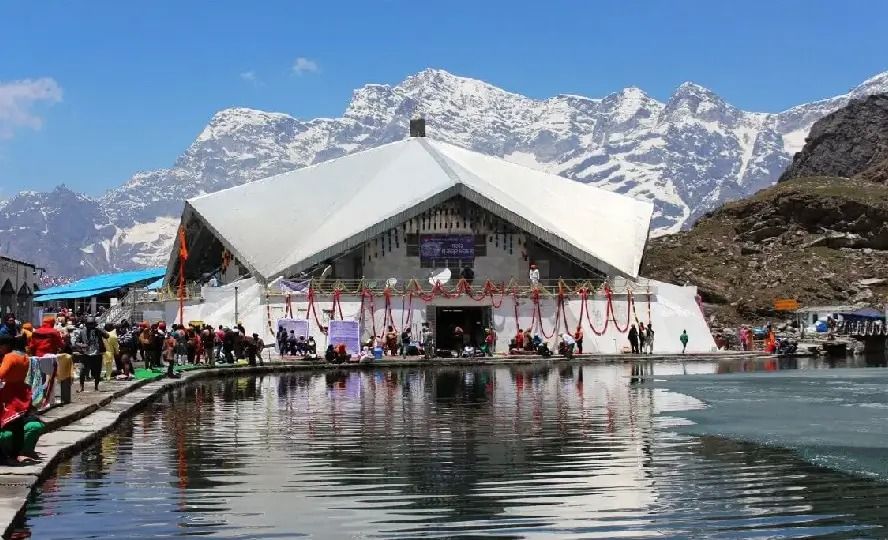
Hemkund Sahib adds a second, completely different dimension. The sacred Sikh shrine at 14,100 feet sits on the shore of a glacial lake that stays partially frozen through most of the season. The Gurudwara has operated here for decades, maintained by volunteers who spend months at altitude to keep the langar — free community kitchen — running through the brief open season. After 6 hours of uphill walking in mountain rain, the hot dal and roti served inside the Gurudwara is one of those meals that earns its place in the memory permanently.
The Itinerary at a Glance
| Day | Route | Type | Hours |
|---|---|---|---|
| Day 1 | Rishikesh to Joshimath | Drive | 9 hrs |
| Day 2 | Joshimath to Govindghat to Ghangaria | Drive + Trek | 5–6 hrs |
| Day 3 | Ghangaria to Valley of Flowers and Back | Day Hike | 5–6 hrs |
| Day 4 | Ghangaria to Hemkund Sahib and Back | Day Hike | 6–7 hrs |
| Day 5 | Ghangaria to Govindghat, Drive Toward Rishikesh | Trek + Drive | Full day |
| Day 6 | Return to Rishikesh | Drive | 3–4 hrs |
Places to Visit During the Valley of Flowers Trek
The Valley of Flowers Trek is much more than a walk through a beautiful alpine valley. The journey takes you through charming Himalayan villages, sacred pilgrimage sites, breathtaking waterfalls, and one of India's most spectacular national parks. Every stop along the route offers a unique experience, making the trek an unforgettable blend of natural beauty, adventure, and spirituality.
1. Govindghat
Govindghat is the starting point of the Valley of Flowers Trek and a popular pilgrimage town situated on the banks of the Alaknanda River. Surrounded by towering mountains, it serves as the gateway to both the Valley of Flowers and Hemkund Sahib. Before beginning the trek, visitors can explore the local market, enjoy the scenic river views, and experience the peaceful atmosphere of this Himalayan settlement.
2. Ghangaria
Located at an altitude of approximately 10,000 feet, Ghangaria is the only inhabited village on the trek and serves as the base camp for both the Valley of Flowers and Hemkund Sahib. Surrounded by dense forests and snow-capped mountains, the village offers comfortable accommodation, restaurants, and basic facilities for trekkers and pilgrims. It is the perfect place to relax before exploring the valley.
3. Valley of Flowers National Park
The highlight of the trek is the breathtaking Valley of Flowers National Park, a UNESCO World Heritage Site famous for its extraordinary biodiversity. During the monsoon season, the valley transforms into a colorful paradise with hundreds of species of alpine flowers blooming across vast meadows. Visitors can admire flowers such as blue poppies, cobra lilies, primulas, orchids, and the famous Brahma Kamal found in the higher reaches. Snow-covered peaks, glaciers, and sparkling streams further enhance the valley's magical beauty.
4. Hemkund Sahib
Situated at an altitude of 14,100 feet, Hemkund Sahib is one of the world's highest Sikh pilgrimage sites. Nestled beside a crystal-clear glacial lake and surrounded by seven snow-covered mountain peaks, the Gurudwara attracts thousands of pilgrims every year. The peaceful surroundings, combined with the spiritual atmosphere and breathtaking mountain scenery, make Hemkund Sahib one of the most memorable destinations of the trek.
5. Pushpawati River
The beautiful Pushpawati River flows through the Valley of Flowers, adding charm and tranquility to the landscape. Originating from glaciers high in the Himalayas, the river creates several small waterfalls and crystal-clear streams along the trekking route. The soothing sound of flowing water and the surrounding wildflowers create a truly unforgettable experience for nature lovers and photographers.
6. Lakshman Ganga
Flowing from the sacred Hemkund Lake, the Lakshman Ganga River accompanies trekkers on part of the trail between Ghangaria and Govindghat. According to local beliefs, the river is associated with Lakshman from the Ramayana, adding cultural and spiritual significance to its natural beauty.
7. Bhyundar Valley
Before entering the Valley of Flowers, trekkers pass through the scenic Bhyundar Valley. Known for its lush greenery, cascading waterfalls, wooden bridges, and dense forests, this picturesque valley provides a peaceful introduction to the Himalayan wilderness. During the monsoon season, the entire landscape comes alive with vibrant vegetation and flowing streams.
8. Govind National Park Landscape
The trekking route passes through beautiful forested areas rich in Himalayan flora and fauna. Lucky visitors may spot Himalayan monals, musk deer, blue sheep, Himalayan griffon vultures, and even signs of elusive wildlife such as the snow leopard in the higher regions. The untouched forests and alpine ecosystems make the journey equally rewarding for wildlife enthusiasts.
Who Should Do This Trek
First-time trekkers, families, school groups, wildlife and botanical photographers, pilgrims combining Hemkund Sahib with the valley visit. Anyone who wants to experience the Himalaya in a season and a setting completely different from the standard autumn trek.
One Thing Most People Do Not Know
The valley closes at 5 PM every day and overnight camping inside is strictly prohibited. This is a conservation measure, not an inconvenience — and it is why the valley looks the way it does. Plan your day accordingly and do not rush through. One properly unhurried day inside is worth more than two quick passes through.